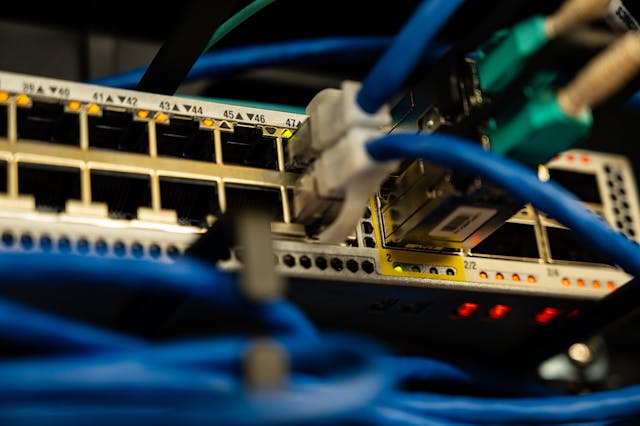
In the ever-evolving world of web hosting, a virtual VPS server stands out as a powerful solution for businesses and individuals seeking flexibility, performance, and affordability. If you’re exploring options for hosting your website or application, understanding the intricacies of virtual VPS servers is essential. For a deeper dive into the subject, check out Virtual Servers VPS.
Read MoreWhat Is a VPS? How Virtual Private Servers Work Under the Hood

In the realm of web hosting, the term Virtual Private Server (VPS) has gained significant traction due to its blend of affordability and performance. A VPS offers a unique solution for businesses and individuals seeking dedicated resources without the hefty price tag of a dedicated server. For a deeper dive into VPS options and comparisons, visit Virtual Servers VPS.
Read MoreFree VPS Options in 2026: Comparing AWS Free Tier, Google Cloud Free, Oracle Cloud, and Free Trials
In the world of web hosting, Virtual Private Servers (VPS) have become a popular choice for users looking for a balance between performance and cost. However, many users are on the lookout for free VPS virtual private server options. This guide will explore the available free VPS hosting solutions, their benefits, and considerations to keep in mind when opting for a free service.
Read MoreLinux VPS Performance Tuning: 9 Optimizations With Benchmarks
Most VPS performance problems are not caused by the CPU or RAM your plan advertises. They come from how the hypervisor shares resources between neighbors, which I/O scheduler your kernel…
Read MoreFree VPS Options in 2026: AWS, Google Cloud, Oracle Cloud, and Azure Free Tiers Compared
Free VPS offers sound tempting — who wouldn’t want a server at zero cost? But the reality is more nuanced. Every free tier comes with hard limits, performance constraints, or…
Read MoreVPS Benchmarking Guide: Test CPU, Disk I/O, Network Speed, and Latency
Benchmarking your VPS is the only reliable way to know if you’re getting the performance you pay for. Raw specs — “4 vCPUs, 8GB RAM” — tell you very little…
Read MoreVPS Root Access in Practice: SSH Hardening, Firewalls, and Daily Administration
Root access is the defining feature that separates VPS hosting from shared hosting. With root privileges you control every layer of the server — kernel parameters, installed packages, firewall rules,…
Read MoreVPS Performance Tuning Guide: Optimize CPU, RAM, and I/O for Maximum Throughput
Getting the most out of your VPS requires more than just signing up for a plan. You need to tune the operating system, database, web server, and application stack for…
Read MoreVPS Server Rental in 2026: What $10–$100/Month Actually Gets You
If you’re shopping for a VPS rental today, you’ll see prices ranging from $5/month up to $200+/month. The difference isn’t just marketing — it’s CPU allocation, I/O limits, network throughput,…
Read MoreWhat Is a VPS? How Virtualization, CPU Shares, and I/O Limits Shape Performance
A VPS is a virtual machine with a guaranteed slice of CPU, RAM, and I/O. Here is how hypervisors, CPU steal, and storage limits actually determine its performance — and how to test them.
Read More